How to Network Without Being Awkward: A Student Founder’s Guide

EIC MBM
Published on October 08, 2025
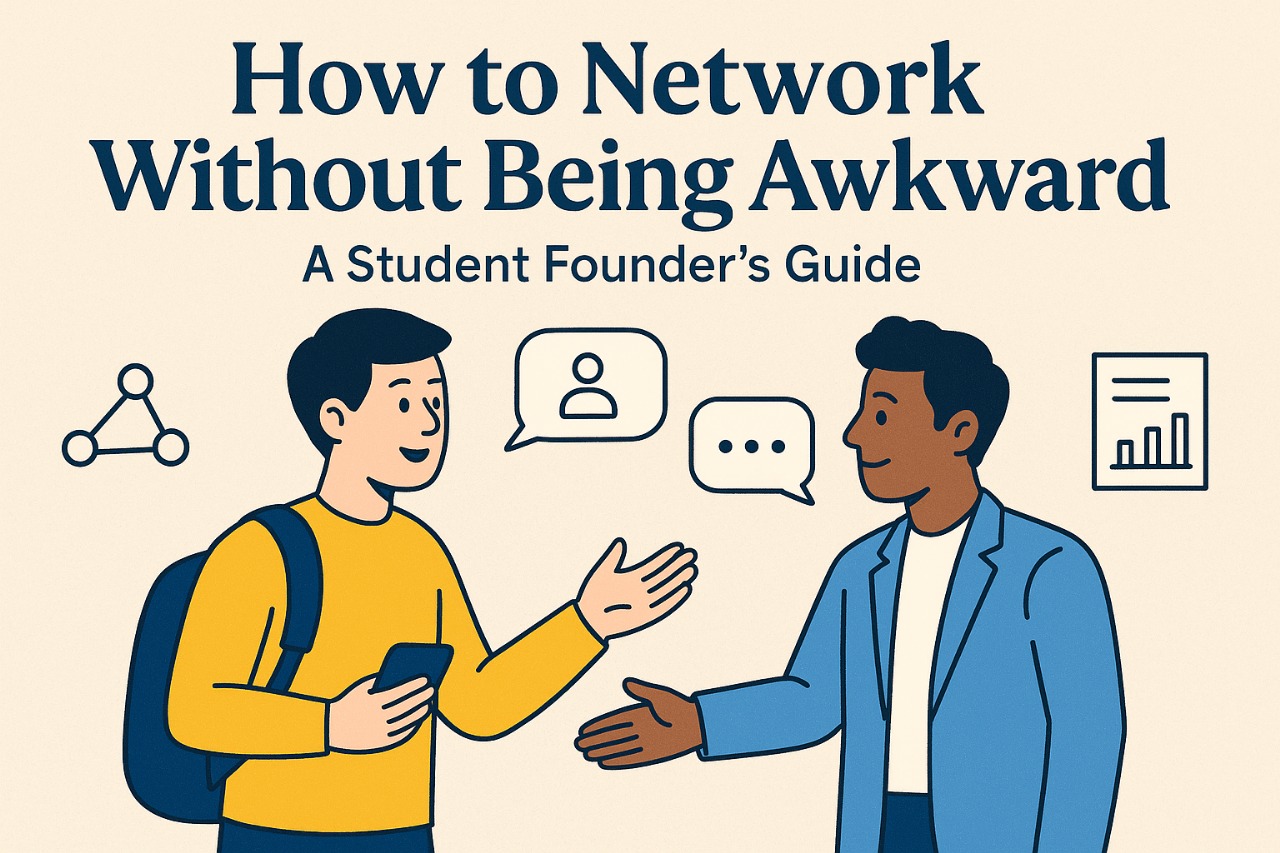
"Your network is not about collecting contacts; it’s about building real relationships."
You’ve validated your idea, built an MVP, and started executing. Now what? To grow, you need support, advice, and connections. But for many students, "networking" sounds intimidating and awkward.
The truth is, networking isn’t about wearing a suit and handing out business cards. It’s about building genuine relationships with people who can guide and support you. Here’s how to do it without the awkwardness.
Step 1: Start with Your Own Campus
Your first and best network is right in front of you. You don’t need to go to big conferences to find valuable connections.
Who to talk to: Professors, seniors, alumni, and members of college clubs like EIC.
How to approach them: Go to their office hours, ask a thoughtful question after a seminar, or just send a polite email asking for 15 minutes of their time to discuss your idea.
Example
A student building an ed-tech app approached their computer science professor. The professor not only gave technical feedback but also connected them with an alumnus working at a major tech company.
Step 2: Give Before You Get
The biggest mistake in networking is asking for something right away. Instead, think about what you can offer. Your time, skills, or even just genuine appreciation can go a long way.
How to do it: Offer to help a senior with their project, volunteer for an event, or share an interesting article with a mentor.
Example
Before asking a local startup founder for advice, a student followed their company on LinkedIn and shared their posts with thoughtful comments for a few weeks. When they finally sent a message, the founder already recognized them and was happy to connect.
Step 3: Use Digital Tools Smartly
Platforms like LinkedIn are powerful, but only if you use them correctly. Don’t just send random connection requests.
Best practices:
- Personalize every request. Mention why you want to connect.
- Engage with their content before reaching out.
- Have a clean and complete profile that tells your story.
Example
Instead of a generic request, send something like: "Hello Mr. Sharma, I'm a student at MBM. I was really inspired by your recent talk on building a SaaS startup. I'd love to connect and follow your work."
Step 4: The Follow-Up Is Everything
Meeting someone once is easy. Building a relationship requires follow-up. A simple, polite message after a conversation can make a huge difference.
What to say: Thank them for their time, mention one specific thing you learned, and keep them updated on your progress every few months.
Example
After a chat with a mentor, send an email: "Thank you for your time yesterday. Your advice on focusing on customer retention was incredibly helpful. We’re already planning to implement a feedback form based on your suggestion."
Final Thoughts
Networking is a superpower for any founder. Don’t think of it as a transaction. Think of it as making friends in the industry. Start small, be genuine, offer value, and you’ll build a support system that will help you long after you graduate.