Don't Give It Away Free: Setting Your First Price

EIC MBM
Published on October 2, 2026
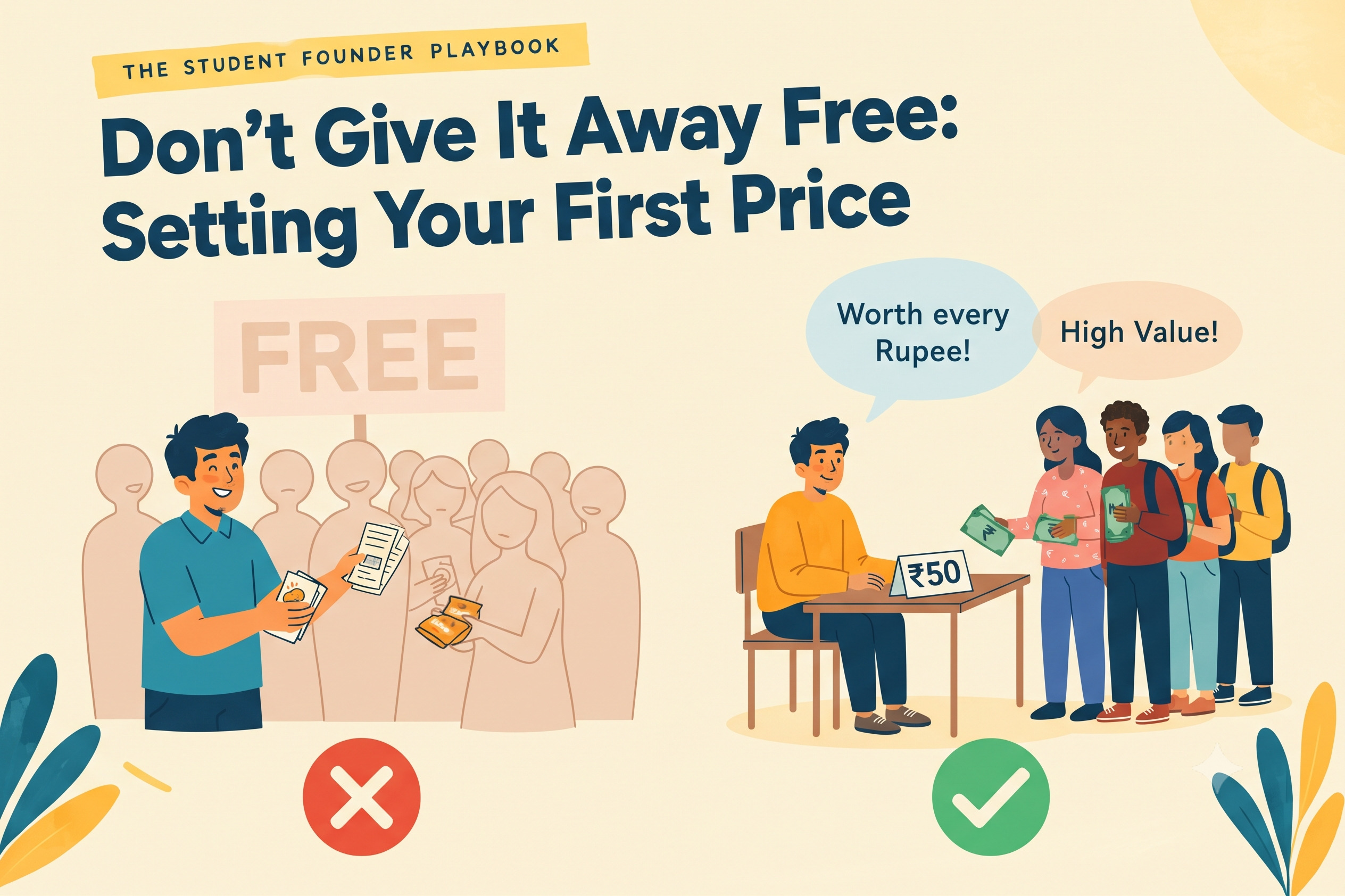
Price is one of the most informative signals a founder can collect. Free usage tells you very little, while a price tests whether the value is real.
Free Is Not a Price
Giving a product away for free feels generous, and it often feels like success. Sign-ups climb, people say thank you, and the numbers look encouraging. Yet free attracts curiosity rather than commitment. People accept things they do not need, try them once, and never return. Free usage can therefore make you feel successful while teaching you almost nothing about whether the product solves a problem worth paying for.
When someone pays, even a small amount, they have made a judgement that the product is worth their money. That judgement is far more meaningful than a sign-up or a compliment. It also gives you a number you can track, compare, and improve.
Price from Value, Not Cost
Many beginners calculate a price by adding up their costs and a margin. The problem is that customers do not care about your costs. They care about what your product saves or gives them. Your costs set the floor below which you cannot survive, but they say nothing about what the customer will pay.
A notes bundle that saves a student three hours before an exam is worth far more to them than the paper and printing it cost you. To think about value clearly, ask the customer what the problem costs them right now. It might cost time, money spent on a workaround, marks lost because of poor notes, or stress before a deadline. A sensible price sits comfortably below that cost, so the customer feels they are getting a good deal.
Test Two or Three Prices with Different Groups
You do not need the perfect price on day one. Offer your product at two or three different prices to separate small groups, and state each offer clearly, for example Rs 20 for this week's notes bundle. Then watch two things: how many people buy, and whether they accept the price quickly or start negotiating.
Quick acceptance usually means the value is obvious. Hesitation may mean the price is too high, or that the value is not yet clear enough to justify the cost. Either way, the answer guides your next move. Keep prices simple and memorable, because complicated pricing confuses buyers and makes it harder to compare your results.
A Worked Example
A student offering a weekly notes bundle for her semester's subjects gave the bundle free to a small group of friends in the first week, mainly to gather feedback. In the second week she offered it to a different group for Rs 20, and most of them paid without asking questions. Two of them asked for a second bundle, which told her the value was clear.
In the third week she tried Rs 40 with another group. Fewer people bought, but those who did read the notes carefully and sent her corrections. Rs 20 maximised adoption, while Rs 40 found the more committed buyers. She settled on a price between the two, continued testing, and wrote down what each group said about the decision.
What Hesitation Tells You
Hesitation deserves careful attention rather than dismissal. When someone says maybe later, they are often signalling that the price, the timing, or the value is not yet clear. Ask them what would make the decision easier. Their answer is usually more useful than any survey question you could write, because it describes the real obstacle in their own terms.
Common Mistakes
Avoid changing the price every day, because buyers need a stable expectation before they can decide. Avoid long explanations of why the price is fair, since a price that needs a lengthy defence often does not yet match the value. And avoid assuming that every hesitant person will never pay. Some will, once the timing or the format suits them better.
Key Takeaway
Price reveals value. Treat hesitation as information, not as rejection.
Reflect
What does your customer currently pay, in money or time, to deal with this problem?