New Frontiers
From Startup To Scaleup

EIC MBM
Published on December 5, 2024

“It's not about ideas. It’s about making ideas happen." — Scott Belsky, Co-founder of Behance
Now that you have an MVP, funding, and hopefully a proven business model generating significant revenue, with customers and clients pouring in, but don’t relax just yet. Sustainably expanding and scaling your hard-earned business can be just as challenging as building it from scratch. Across almost all industries, the average failure rate in the first year is 10%. However, in years two through five, a staggering 70% of new businesses fail because they fail to scale and expand their startup viably. Work hard to grow, but don’t "WeWork" your way into a deficit and a hard fall to the bottom. Building a sustainable business model and maintaining healthy cash flow are obviously crucial steps in growing a company. Still, the majority of businesses fail to stay afloat at this stage.
The real circus hence begins. Suddenly, you're juggling customer satisfaction, investors, brand building, and growing your customer base. You need to optimize internal processes, your supply chain, and services to meet the growing demand, improve and tweak your product, and update your services to keep up with market trends—all while making sure your customers remain happy. You should keep these three major things in mind:
- Strengthen customer relations
- Focus on stability and growth by adopting scalable systems that can handle increased demand.
- Most importantly, master cash flow management. The most common reason for a failing startup at this stage is burned-out funds.
Blinkit vs. Peppertap — A Tale of Two Strategies
Growing a startup is like baking a cake—you need the right ingredients in the right order. Add too much too soon, and it can fall flat. This is exactly what happened to Peppertap while Blinkit (formerly Grofers) nailed the recipe for success in the quick commerce space. Let’s dive into what they did differently and why one thrived while the other fizzled out.
Peppertap: Too Fast, Too Soon
Peppertap burst onto the scene in 2014 with big dreams of delivering groceries to your doorstep. The problem? They expanded like there was no tomorrow—into multiple cities—without perfecting the basics.
- Logistics Woes: They depended on third-party grocery stores for stock. Result? Late deliveries, missing items, and frustrated customers.
- Cash Burn Disaster: Scaling before stabilizing meant they ran out of money faster than you can say "hyperlocal delivery."
By 2016, Peppertap closed shop, leaving behind a cautionary tale: speed without strategy is a recipe for disaster.
Blinkit: Slow and Steady Wins the Race
Blinkit, on the other hand, played it smart. They focused on the fundamentals before chasing rapid expansion.
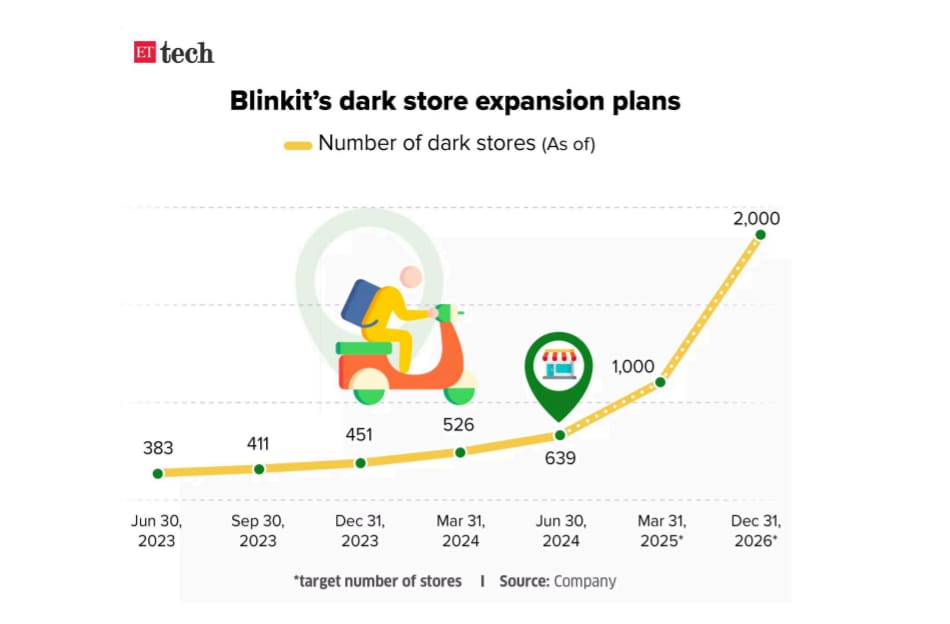
- Dark Stores for the Win: Blinkit set up its own mini-warehouses, ensuring they had control over stock and could deliver faster than you could say “milk emergency.”
- Customer First: Blinkit promised delivery in 10 minutes—and delivered. Customers kept coming back because it worked, consistently
- Smart Expansion: Instead of spreading themselves too thin, Blinkit expanded only after making sure they could deliver the goods (literally)
The Big Lesson: Scale Smarter, Not Faster
Scaling a startup is one of the most exciting yet perilous phases of entrepreneurship. As Peppertap's story shows, rapid expansion without a solid foundation can lead to collapse, while Blinkit's success demonstrates that thoughtful, deliberate growth ensures long-term viability.
The takeaway is clear: it’s not just about how fast you grow but how well you prepare for growth. Prioritize your customers, maintain financial discipline, and ensure scalability before expansion. In the race to success, the startups that endure are those that balance ambition with strategy, proving that slow and steady truly wins the race.