Startup Idea Validation

EIC MBM
Published on September 22, 2025
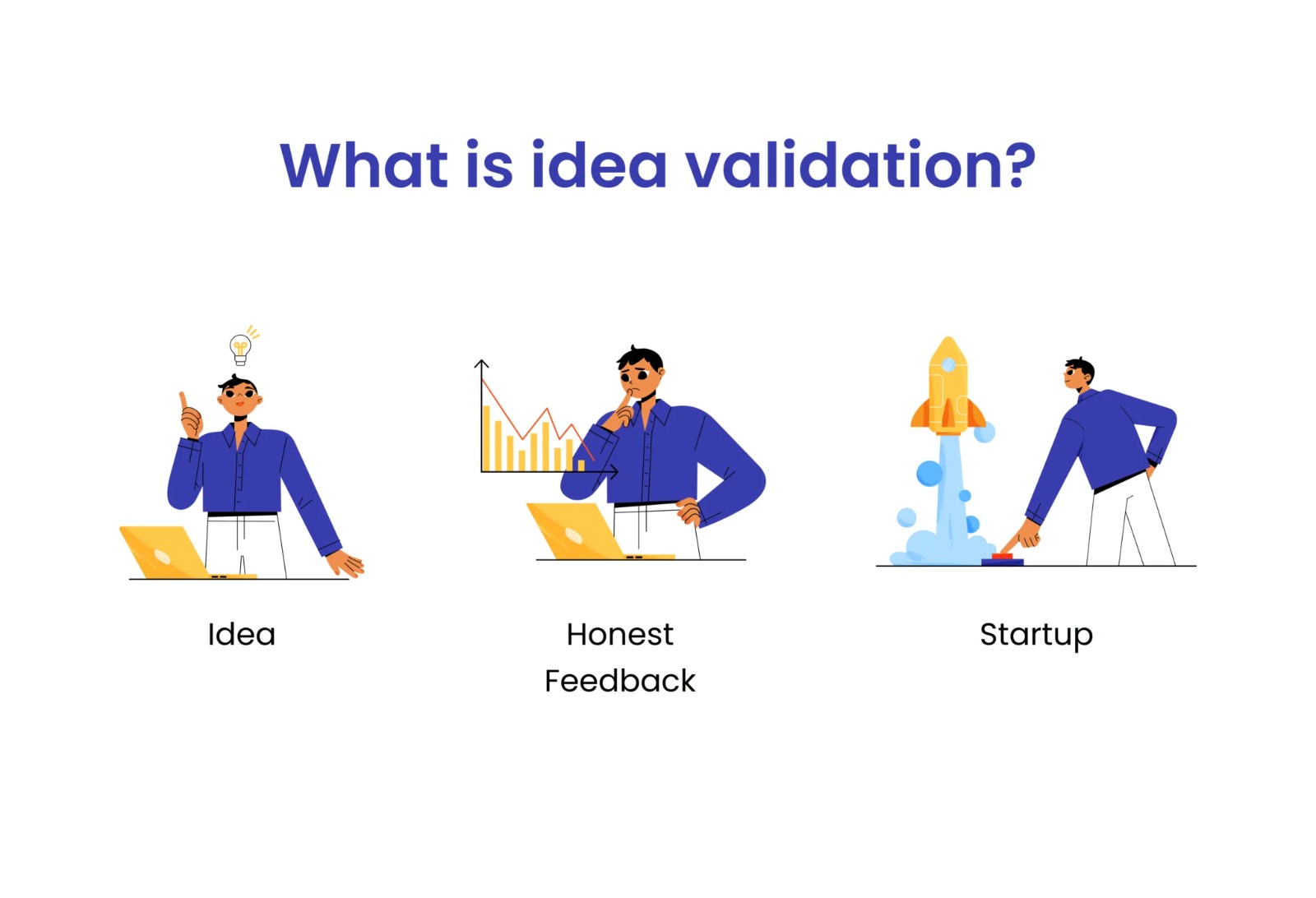
Have a startup idea? That’s exciting! But here’s the truth: not every idea is worth building. Before you spend time or money, you need to know if people actually want what you’re offering. That’s where idea validation comes in.
Validation simply means testing your idea with real people to check if it solves a real problem. Think of it as testing the ground before building a house — no foundation, no building.
In this blog, we’ll show you practical, beginner-friendly steps to validate your idea. Even if you’re a fresher who knows nothing about entrepreneurship, you’ll be able to follow along.
Step 1: Write Your Idea in One Sentence
If you can’t explain your idea in one line, it’s too complicated. Use this formula:
- I help [who] solve [problem] by [how].
Examples:
- I help hostel students get late-night snacks by connecting them with nearby shops that deliver.
- I help juniors stay updated on college events through a single WhatsApp broadcast.
- I help students save money on textbooks by renting used books instead of buying new ones.
Step 2: Talk to Real People
Go beyond assumptions. Talk to 10–15 people who match your target audience.
Ask questions like:
- When was the last time you faced this problem?
- How do you currently solve it?
- How important is it (1–10)?
- Would you try a solution like mine? Why or why not?
Example: If your idea is snack delivery, ask hostel friends: “What do you usually do when hungry after mess hours? Would you pay ₹20 extra for delivery?”
Step 3: Create a Simple Landing Page
You don’t need coding skills. Use Canva, Google Sites, or Notion.
Add:
- A clear headline (what it does, who it’s for).
- 2–3 bullet points with benefits.
- A button like “Join the waitlist” or “Sign up for early access.”
Example: “Late-Night Snacks Delivered to Your Hostel” → Button: “Notify Me When It Launches.”
Share it with friends and in student groups. If people click or sign up, that’s real interest.
Step 4: Test Without Building
This is called a concierge MVP — doing things manually before creating tech.
Examples:
- Take snack orders on WhatsApp and deliver them yourself.
- Collect fest details and share via a Google Doc.
- Rent out 3–4 books manually and track payments on Excel.
If people use it and return, you’re solving a real problem.
Step 5: Check If People Will Pay
Likes and sign-ups are good, but payment = real validation.
Examples:
- 10 hostel students pay ₹50 each for a snack subscription.
- Juniors pay ₹100 for a semester-long events channel.
- 5 students pay ₹200 to rent books for a semester.
Even small payments show strong commitment.
Step 6: Learn and Improve
Validation isn’t about proving your idea perfect — it’s about learning. If students don’t respond, adjust your idea, change your target audience, or pivot completely.
- Fun fact: Swiggy started small, by just taking phone orders and delivering food manually.
A Quick 2-Week Student Plan
- Week 1: Write idea in one line → Do 10 interviews → Create landing page → Share it.
- Week 2: Serve 2–3 users manually → Ask for small payments/pre-orders → Review results.
Final Thoughts
Validation is the first step of entrepreneurship. It’s not about building fast, it’s about building smart.
- Don’t fall in love with your idea — fall in love with the problem.
- Small tests today can save you from big failures tomorrow.
- Every successful startup began with small experiments like these.
If you’re a student with a dream, start validating your idea this week. Talk to people, test it, and take the first step on your founder’s journey.